Platform comparison
| Platform | YES odds | NO odds | Fee | KYC | Settlement | |
|---|---|---|---|---|---|---|
Polymarket (via Kalshi Alternative) Pick polygram.ink (preferred broker) |
32% | 68% | 0% (USDC on-chain) | No-KYC up to $1,500 | USDC, auto via UMA oracle | Go to the live market → |
Polymarket (direct) polymarket.com |
32% | 68% | 0% | Geo-blocked in US/UK/EU | USDC, on-chain | Go to the live market → |
Kalshi kalshi.com |
— | — | Up to 7% per trade | US-only, KYC required | USD | Go to the live market → |
Betfair Exchange betfair.com |
— | — | 2-5% commission | Full KYC from first trade | GBP / EUR | Go to the live market → |
Manifold Markets manifold.markets |
— | — | Play-money (mana) | None — play-money | Mana (no cash-out) | Go to the live market → |
Outcome probabilities
Current market-implied probability for each outcome, from the live order book.
| Outcome | Probability |
|---|---|
| United States | 32% |
| United Kingdom | 5% |
| France | 5% |
| Italy | 2% |
| Germany | 2% |
| Netherlands | 1% |
| Greece | 1% |
| Australia | 1% |
Market context
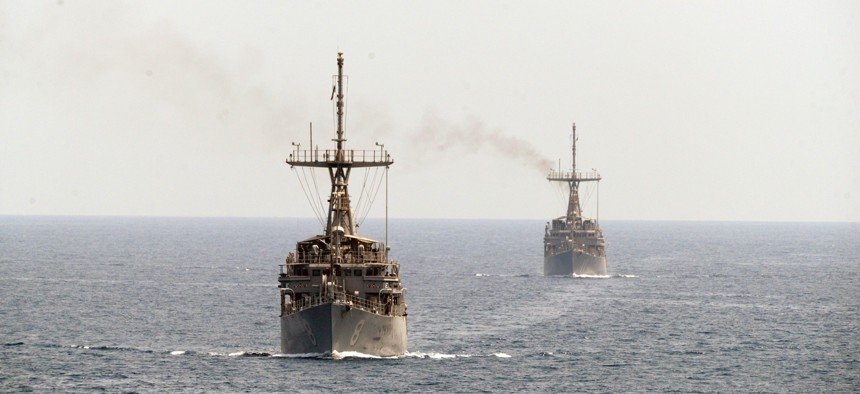
The question hinges on whether any country's naval vessels will pass through the Strait of Hormuz—the 21-mile chokepoint between Iran and Oman through which roughly one-third of global seaborne oil traffic flows—between now and the end of July 2026. The strait has been a persistent flashpoint for naval activity, particularly involving the US Navy, which maintains a continuous presence in the Persian Gulf and regularly transits the passage. The 4% implied probability across most major platforms reflects the baseline assumption that routine transits will occur, yet the market's framing appears to treat this as a binary surprise event rather than an expected operational pattern.
Historical precedent complicates interpretation here. The US Navy, Royal Navy, French Navy, and other allied forces conduct regular transits through the strait; these are documented in open-source naval tracking and official statements. Iran's Islamic Revolutionary Guard Corps Navy operates within the strait routinely. If the market intends to capture *any* warship transit by *any* nation, the probability should reflect near-certainty given documented traffic patterns. The low 4% figure suggests either that traders are pricing in a settlement dispute (ambiguity over what counts as a "transit" versus routine patrol), or that the market design implicitly assumes a narrow definition—perhaps only non-routine, politically significant passages. Kalshi's more granular outcome definitions sometimes clarify such ambiguities better than Polymarket's broader YES/NO structure, though this particular market's resolution criteria remain open to interpretation.
Traders should monitor announcements of scheduled naval exercises, Iranian naval posturing, and any formal declarations of strait closure or restrictions. Recent tensions in early 2024 saw increased Houthi attacks on shipping and US military responses, which typically involve Gulf-based operations. The settlement window extends 18 months, providing ample time for geopolitical shifts to alter transit patterns, though the underlying question of whether *any* warship passes through remains almost certain in historical terms.
Methodology
This page compares Which countries will send warships through the Strait of Hormuz by July 31? specifically across Polymarket, Kalshi, Betfair Exchange and Smarkets. The live probability is the Polymarket mid; the comparison columns summarise each venue's fee structure, KYC, settlement currency and payment rails. Every CTA routes to Kalshi Alternative, which mirrors the Polymarket order book at 0% fees.
Resolution & payout
Settlement is the biggest difference between the four platforms: Polymarket on-chain in USDC (instant), Kalshi USD via CFTC (T+1), Betfair and Smarkets in local currency via bank withdrawal (T+1 to T+3). On-chain settlement clears in minutes — the fastest payout path of the four.
FAQ
- Polymarket vs Kalshi — which is better?
- Depends on your location. Kalshi is CFTC-regulated, US-only with full KYC. Polymarket is global, on-chain, no KYC up to $1,500. Polymarket has ~10x higher liquidity but higher regulatory risk.
- Which platform has the deepest liquidity?
- Polymarket — by a wide margin. Top markets reach $50-500M volume, Kalshi ~$200M cumulative, Betfair similar. Deeper liquidity means your trade moves the quote less.
- What about Smarkets as an alternative?
- Smarkets is a UK betting exchange with a lower default commission (2%) than Betfair. Liquidity on political markets is below Polymarket, comparable to Kalshi. Geo-blocked in many jurisdictions.
- Are all these platforms regulated?
- No. Kalshi is CFTC-regulated (US). Betfair and Smarkets are UK Gambling Commission licensed. Polymarket operates without explicit regulation — a different risk profile than a regulated sportsbook.
- Which platform supports Klarna/SOFORT?
- Directly: none. Polymarket accepts only USDC on Polygon. Kalshi Alternative offers a fiat on-ramp via Klarna or SOFORT (DE/AT/CH) and converts internally to USDC for the Polymarket order book. T+1 processing.
%22%2F%3E%3Cpath%20d%3D%22M%206%2066%20A%2026%2026%200%200%201%2058%2066%22%20fill%3D%22%23E6B98D%22%20opacity%3D%220.9%22%2F%3E%3Ccircle%20cx%3D%2232%22%20cy%3D%2226%22%20r%3D%2222%22%20fill%3D%22%23F5CBA7%22%2F%3E%3Crect%20x%3D%2210%22%20y%3D%224%22%20width%3D%2244%22%20height%3D%2214%22%20rx%3D%227%22%20fill%3D%22%2314b8a6%22%20opacity%3D%220.9%22%2F%3E%3Crect%20x%3D%228%22%20%20y%3D%2218%22%20width%3D%228%22%20%20height%3D%2218%22%20rx%3D%224%22%20fill%3D%22%2314b8a6%22%20opacity%3D%220.7%22%2F%3E%3Crect%20x%3D%2248%22%20y%3D%2218%22%20width%3D%228%22%20%20height%3D%2218%22%20rx%3D%224%22%20fill%3D%22%2314b8a6%22%20opacity%3D%220.7%22%2F%3E%3C%2Fsvg%3E) and
and%22%2F%3E%3Cpath%20d%3D%22M%206%2066%20A%2026%2026%200%200%201%2058%2066%22%20fill%3D%22%23E6B98D%22%20opacity%3D%220.9%22%2F%3E%3Ccircle%20cx%3D%2232%22%20cy%3D%2226%22%20r%3D%2222%22%20fill%3D%22%23F5CBA7%22%2F%3E%3Crect%20x%3D%2210%22%20y%3D%224%22%20width%3D%2244%22%20height%3D%2214%22%20rx%3D%227%22%20fill%3D%22%2314b8a6%22%20opacity%3D%220.9%22%2F%3E%3Crect%20x%3D%228%22%20%20y%3D%2218%22%20width%3D%228%22%20%20height%3D%2218%22%20rx%3D%224%22%20fill%3D%22%2314b8a6%22%20opacity%3D%220.7%22%2F%3E%3Crect%20x%3D%2248%22%20y%3D%2218%22%20width%3D%228%22%20%20height%3D%2218%22%20rx%3D%224%22%20fill%3D%22%2314b8a6%22%20opacity%3D%220.7%22%2F%3E%3C%2Fsvg%3E)
Trade Which countries will send warships through the Strai… on Kalshi Alternative
Live order book, 0% fees, USDC settlement in seconds.
Open live market →