Platform comparison
| Platform | YES odds | NO odds | Fee | KYC | Settlement | |
|---|---|---|---|---|---|---|
Polymarket (via Kalshi Alternative) Pick polygram.ink (preferred broker) |
42% | 58% | 0% (USDC on-chain) | No-KYC up to $1,500 | USDC, auto via UMA oracle | Go to the live market → |
Polymarket (direct) polymarket.com |
42% | 58% | 0% | Geo-blocked in US/UK/EU | USDC, on-chain | Go to the live market → |
Kalshi kalshi.com |
— | — | Up to 7% per trade | US-only, KYC required | USD | Go to the live market → |
Betfair Exchange betfair.com |
— | — | 2-5% commission | Full KYC from first trade | GBP / EUR | Go to the live market → |
Manifold Markets manifold.markets |
— | — | Play-money (mana) | None — play-money | Mana (no cash-out) | Go to the live market → |
Outcome probabilities
Current market-implied probability for each outcome, from the live order book.
| Outcome | Probability |
|---|---|
| December 31 | 42% |
| September 30 | 41% |
| August 31 | 9% |
| July 31 | 0% |
Market context
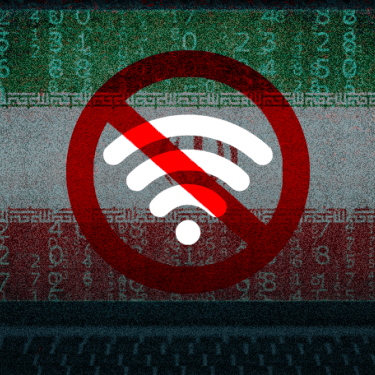
A total internet blackout in Iran would mean Cloudflare Radar shows nationwide bytes transferred collapsing to 1.0% or less of the trailing four-week maximum for at least six straight hourly readings. That is a stricter test than a merely “bad” connection, so the current 0% crowd view implies traders see no near-term trigger for a countrywide clampdown of that severity.
The main historical guide is that Iran has repeatedly used large-scale shutdowns during unrest and conflict, but they have usually been tied to specific escalations rather than appearing without warning. In 2019, authorities imposed a near-total nationwide shutdown for roughly a week during fuel-price protests, while in January 2026 and again in the 2026 war period, monitoring groups recorded extended outages and extremely low connectivity, including a record-length blackout that later eased. Those episodes show the event is plausible, but also that the market definition is narrow: if connectivity stays above the 1.0% threshold, or the drop is intermittent rather than six consecutive hours, the market would still resolve No.[1][4][11][16]
For traders comparing venues, Polymarket-style markets usually quote a direct yes/no price that can be read as implied probability, whereas Kalshi, Betfair and Smarkets tend to express the same view through different decimal-odds or exchange-style pricing, with fees and spread affecting the effective entry price. In practice, that matters here because a brief spike in odds on a shutdown rumour can look larger on one venue than another once commission, liquidity and KYC access are factored in. The key catalysts are any renewed domestic unrest, a security-related announcement from Tehran, or regional escalation that could prompt a defensive cut-off; recent reporting shows Iranian authorities have previously restored or tightened access quickly around conflict developments, so monitoring hours rather than days is important.[5][11][15]
Methodology
We read Total Internet Blackout in Iran by 2026? from four platform perspectives: Polymarket (on-chain CLOB), Kalshi (CFTC-regulated exchange), Betfair Exchange (sports book exchange), Smarkets (peer-to-peer betting exchange). Polymarket's live mid is the canonical probability; the side-by-side columns benchmark fees, KYC, settlement currency and deposit rails so you can choose the venue that fits your jurisdiction and trade size.
Resolution & payout
Polymarket settles via UMA Optimistic Oracle on Polygon. A proposer posts the outcome with a bond, the two-hour window runs, then the smart contract pays USDC.
Kalshi settles USD through the CFTC-regulated clearinghouse — the cleanest variant, with heavier KYC. Betfair Exchange settles in account currency (GBP/EUR), net of 2-5% commission. Smarkets follows the same model as Betfair with a lower default 2% commission.
FAQ
- What does Polymarket cost vs Kalshi?
- Polymarket: 0% fees, only Polygon network costs (~$0.01/trade). Kalshi: up to 7% per trade plus spread. For high-frequency traders, Polymarket is dramatically cheaper.
- Which platform has the deepest liquidity?
- Polymarket — by a wide margin. Top markets reach $50-500M volume, Kalshi ~$200M cumulative, Betfair similar. Deeper liquidity means your trade moves the quote less.
- Is Betfair a Polymarket alternative?
- Only partially. Betfair Exchange is UK-focused with a sports-betting emphasis; they have politics markets but with thinner liquidity than Polymarket. Settlement in GBP/EUR, 2-5% commission on winnings.
- Which platform is accessible globally?
- Polymarket is geo-blocked in the US/UK/EU. Kalshi is US-only. Betfair and Smarkets are UK-restricted. Kalshi Alternative has a different geo footprint and routes to Polymarket's order book at 0% fees.
- Which platform supports Klarna/SOFORT?
- Directly: none. Polymarket accepts only USDC on Polygon. Kalshi Alternative offers a fiat on-ramp via Klarna or SOFORT (DE/AT/CH) and converts internally to USDC for the Polymarket order book. T+1 processing.
%22%2F%3E%3Cpath%20d%3D%22M%206%2066%20A%2026%2026%200%200%201%2058%2066%22%20fill%3D%22%23E6B98D%22%20opacity%3D%220.9%22%2F%3E%3Ccircle%20cx%3D%2232%22%20cy%3D%2226%22%20r%3D%2222%22%20fill%3D%22%23F5CBA7%22%2F%3E%3Crect%20x%3D%2210%22%20y%3D%224%22%20width%3D%2244%22%20height%3D%2214%22%20rx%3D%227%22%20fill%3D%22%2314b8a6%22%20opacity%3D%220.9%22%2F%3E%3Crect%20x%3D%228%22%20%20y%3D%2218%22%20width%3D%228%22%20%20height%3D%2218%22%20rx%3D%224%22%20fill%3D%22%2314b8a6%22%20opacity%3D%220.7%22%2F%3E%3Crect%20x%3D%2248%22%20y%3D%2218%22%20width%3D%228%22%20%20height%3D%2218%22%20rx%3D%224%22%20fill%3D%22%2314b8a6%22%20opacity%3D%220.7%22%2F%3E%3C%2Fsvg%3E) and
and%22%2F%3E%3Cpath%20d%3D%22M%206%2066%20A%2026%2026%200%200%201%2058%2066%22%20fill%3D%22%23E6B98D%22%20opacity%3D%220.9%22%2F%3E%3Ccircle%20cx%3D%2232%22%20cy%3D%2226%22%20r%3D%2222%22%20fill%3D%22%23F5CBA7%22%2F%3E%3Crect%20x%3D%2210%22%20y%3D%224%22%20width%3D%2244%22%20height%3D%2214%22%20rx%3D%227%22%20fill%3D%22%2314b8a6%22%20opacity%3D%220.9%22%2F%3E%3Crect%20x%3D%228%22%20%20y%3D%2218%22%20width%3D%228%22%20%20height%3D%2218%22%20rx%3D%224%22%20fill%3D%22%2314b8a6%22%20opacity%3D%220.7%22%2F%3E%3Crect%20x%3D%2248%22%20y%3D%2218%22%20width%3D%228%22%20%20height%3D%2218%22%20rx%3D%224%22%20fill%3D%22%2314b8a6%22%20opacity%3D%220.7%22%2F%3E%3C%2Fsvg%3E)
Trade Total Internet Blackout in Iran by 2026? on Kalshi Alternative
Live order book, 0% fees, USDC settlement in seconds.
Open live market →